
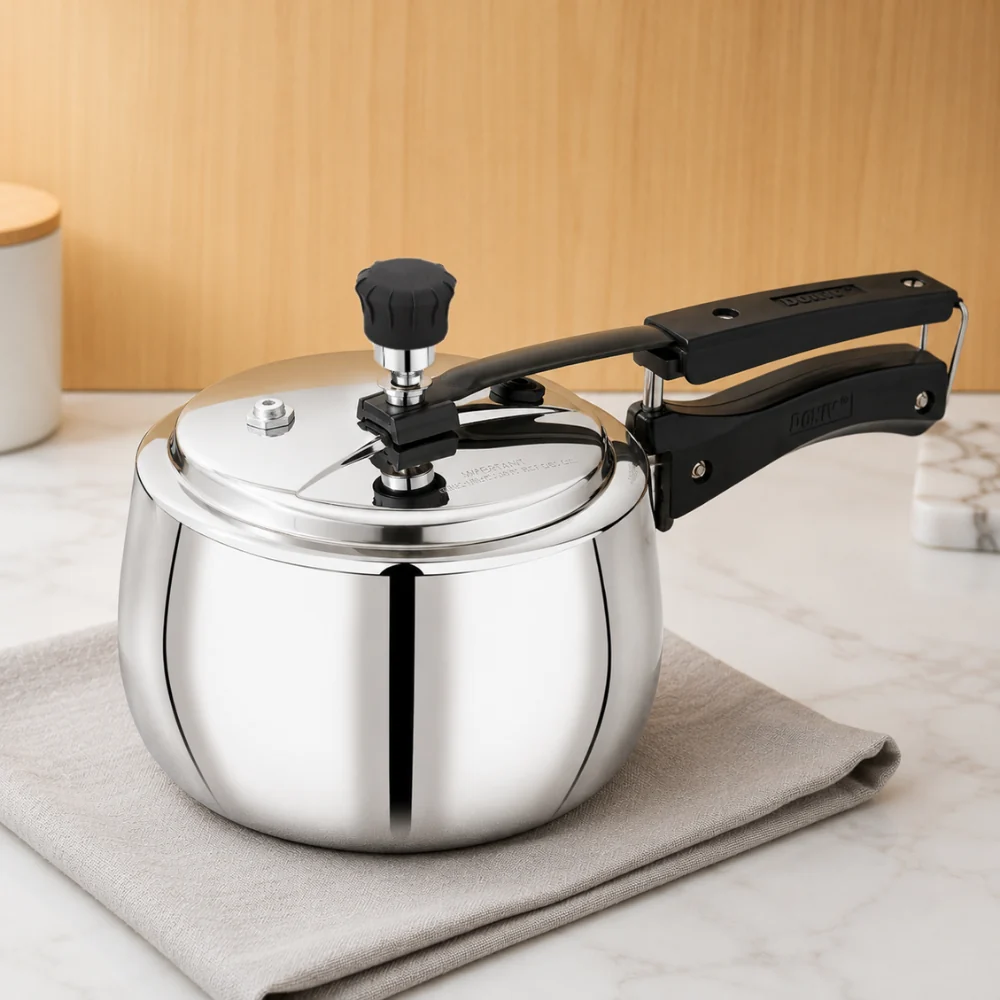
A pressure cooker can change the way you cook.
A pot of dried beans that normally needs hours on the stove can become dinner much sooner. Tough cuts of meat turn tender. Curries develop deep, rich flavors without spending an afternoon simmering. And an electric pressure cooker can take the convenience even further by handling much of the cooking process for you.
But choosing one isn’t quite as simple as picking the cooker with the most buttons.
There are traditional stovetop pressure cookers, compact models designed for everyday meals, large-capacity cookers for families, and sophisticated electric pressure cookers and multi-cookers that can also sauté, steam, slow-cook, make rice, and more.
The right choice depends less on the number of functions printed on the box and more on how you actually cook.
Our Pressure Cooker Picks at a Glance
| Category | Best suited for | What to look for |
|---|---|---|
| Stovetop Pressure Cooker | Traditional, high-heat cooking | Strong construction, pressure control, comfortable handles |
| Electric Pressure Cooker | Hands-off everyday cooking | Intuitive controls, reliable pressure programs, easy cleaning |
| Compact Pressure Cooker | 1–2 people | Smaller capacity, compact footprint |
| Family-Size Pressure Cooker | Families and batch cooking | 6–8 qt/L capacity, sturdy construction |
| Multi-Cooker | Maximum versatility | Pressure cooking, sautéing, steaming, slow cooking |
| Premium Pressure Cooker | Serious home cooks | Precise controls, excellent materials, refined design |
| Budget Pressure Cooker | Occasional users | Essential pressure functions and safety features |
What Is a Pressure Cooker, Exactly?
A pressure cooker is essentially a sealed cooking vessel that uses steam to build pressure.
As pressure rises inside the pot, the boiling point of water increases, allowing food to cook at a higher temperature than it would in an ordinary covered pot. The result is faster cooking for foods such as beans, grains, tough cuts of meat, and many stews.
Modern pressure cookers also incorporate safety mechanisms that help regulate pressure and prevent the lid from being opened while the cooker is still pressurized. You should always follow the manufacturer’s operating and safety instructions.
That basic principle is shared by both stovetop and electric models. The major difference is how the heat and pressure are controlled.
Stovetop vs. Electric Pressure Cooker
This is the decision that matters most.
| Feature | Stovetop | Electric |
|---|---|---|
| Heat source | Cooktop | Built-in heating element |
| Control | Manual | Electronic |
| Supervision | More hands-on | More hands-off |
| Speed | Often faster to reach pressure | Generally slower to reach pressure |
| Sautéing | Excellent | Available on many models |
| Extra cooking modes | Limited | Often extensive |
| Counter space | Minimal when stored | Requires dedicated counter/storage space |
| Learning curve | Moderate | Generally easier |
| Best for | Traditional cooks | Convenience and versatility |
Independent testing has found stovetop pressure cookers can be faster and particularly strong at browning, while electric models trade some speed for easier operation and additional functions.
Choose a Stovetop Pressure Cooker If…
You already enjoy cooking on the stove and don’t mind adjusting the heat yourself.
Stovetop models are particularly appealing if you want a straightforward piece of cookware rather than another electronic appliance on your counter. They’re also useful for cooks who regularly brown meat or vegetables before pressure cooking.
Choose an Electric Pressure Cooker If…
You want dinner to require less supervision.
Electric models automatically control temperature and pressure and commonly include programs for functions such as slow cooking, steaming, rice cooking, and sautéing.
For a busy household, that versatility can make an electric pressure cooker more than just a pressure cooker. It can effectively replace several pieces of equipment.
The Best Pressure Cooker Categories
Rather than looking for one universal winner, consider which category fits your kitchen.
1. Best Traditional Stovetop Pressure Cooker
Best for: Curries, dals, beans, meat, rice and everyday stovetop cooking.
A traditional pressure cooker remains one of the most practical choices for cooks who don’t need digital controls.
Look for:
-
Durable stainless steel construction
-
A thick, well-designed base
-
Reliable pressure regulation
-
Comfortable handles
-
Compatibility with your cooktop
-
Easy-to-replace sealing components
The biggest advantage is simplicity. There’s no control panel, software or electronic heating element to learn.
For cooks who grew up using pressure cookers, this may still be the most natural choice.
2. Best Electric Pressure Cooker
Best for: Busy cooks who want convenience.
Electric pressure cookers make pressure cooking more approachable. Instead of managing the heat manually, you select a program or cooking time and allow the appliance to regulate the process.
The best models make the basics intuitive rather than burying them under dozens of unnecessary programs.
Prioritize:
-
Easy-to-read controls
-
Reliable pressure release
-
Manual pressure settings
-
A good sauté function
-
Removable cooking pot
-
Easy-to-clean lid components
-
Replacement parts availability
3. Best Multi-Cooker
Best for: Kitchens where one appliance needs to do several jobs.
This is where electric pressure cookers become particularly interesting.
Many modern multi-cookers combine pressure cooking with functions such as:
-
Slow cooking
-
Rice cooking
-
Steaming
-
Sautéing
-
Keeping food warm
-
Yogurt making
-
Sous vide
-
Air frying on selected models
However, more functions don’t automatically mean better performance. Independent testing evaluates multi-cookers across individual functions because a cooker can excel at pressure cooking while being merely average at another task.
If you already own a slow cooker, rice cooker and air fryer, you may not need every additional function. But if you’re starting from scratch, consolidation can be genuinely useful.
4. Best Compact Pressure Cooker
Best for: Singles, couples and smaller kitchens.
A smaller cooker takes less storage space and makes sense when you’re generally preparing one or two portions.
The key is not to buy something so small that your favorite recipes become impractical.
Consider what you actually cook. A compact cooker may be perfect for rice, lentils, small batches of soup and everyday meals, but less useful for large cuts of meat or batch cooking.
5. Best Family-Size Pressure Cooker
Best for: Families, entertaining and meal preparation.
A larger cooker gives you room to prepare substantial quantities of food at once.
Six-quart/liter-class cookers are particularly common, while larger models can make sense for households that regularly batch-cook.
Don’t choose a large model simply because bigger sounds better. Pressure cookers have maximum fill limits, and foods such as beans and grains require additional room because they expand during cooking.
6. Best Premium Pressure Cooker
Best for: Serious home cooks who want refined construction and control.
Premium pressure cookers tend to distinguish themselves through materials, engineering, controls and finishing rather than simply adding more cooking programs.
Look for:
-
High-quality stainless steel
-
A substantial cooking base
-
Precise pressure control
-
Excellent handles and locking mechanisms
-
Thoughtful pressure-release controls
-
Strong warranty support
-
Replacement parts availability
This is the category where paying more can make sense—but only if the features solve a problem you actually have.
What Size Pressure Cooker Should You Buy?
Capacity is one of the easiest specifications to misunderstand.
A cooker labeled 6 quarts or liters doesn’t mean you can fill it to six quarts with food.
Pressure cookers have maximum fill guidelines, and foods that expand or foam—particularly beans and grains—require additional headroom.
As a general starting point:
| Household | Typical capacity to consider |
|---|---|
| 1–2 people | 3–4 L/qt |
| 2–4 people | 5–6 L/qt |
| 4–6 people | 6–8 L/qt |
| Batch cooking | 8 L/qt or larger |
Treat these as starting points rather than strict rules. Someone cooking large batches every Sunday may want a larger cooker than a family of four that mainly prepares individual meals.
The Features That Actually Matter
A pressure cooker can have twenty cooking programs and still be frustrating to use.
These are the features worth paying attention to.
Pressure Control
Pressure settings give you greater control over cooking.
For an electric model, look for straightforward high- and low-pressure options rather than a complicated interface that makes basic cooking difficult.
Sauté Function
This is one of the most useful features on an electric pressure cooker.
Being able to brown onions, garlic, vegetables or meat directly in the cooking pot means fewer dishes and better flavor development.
Browning ingredients before pressure cooking can add depth to dishes, particularly stews and braises.
Pressure Release
Look for a pressure-release system that’s easy to understand and operate.
The cooker should clearly indicate when pressure has been released and when the lid can safely be opened.
Cooking Pot
The inner pot deserves more attention than it usually gets.
Stainless steel is durable and doesn’t rely on a coating for its cooking surface. Nonstick interiors can make cleanup easier but may require more care.
Cleaning
Removable parts make a significant difference.
Pay particular attention to the sealing ring, steam-release components and underside of the lid. These areas can collect food residue and need regular cleaning.
Replacement Parts
This is easy to overlook when buying.
A pressure cooker may last for years, but seals and other components can eventually need replacement. A brand with readily available replacement parts can therefore be more useful than a cheaper model that becomes difficult to maintain.
Pressure Cooker Buying Checklist
Before you buy, ask yourself these questions:
What do I cook most often?
Curries and dals? Beans? Meat? Rice? Soups? Batch meals?
How many people am I cooking for?
Choose capacity around your real cooking habits rather than the biggest number available.
Do I want control or convenience?
Stovetop models offer direct control. Electric models automate more of the process.
Do I need multiple cooking functions?
If you already own several appliances, perhaps not.
How much counter space do I have?
Electric models can be surprisingly bulky.
Can I get replacement parts?
Check seals, inner pots and other consumable components before buying.
Is the interface actually easy to use?
A machine with fewer functions can be preferable if the functions you need are easier to access.
Pressure Cooker vs. Multi-Cooker
The terms are sometimes used interchangeably, but they’re not exactly the same.
A traditional pressure cooker is primarily designed to pressure cook.
A multi-cooker is a countertop appliance that may include pressure cooking alongside several other cooking methods.
| If you want… | Consider… |
|---|---|
| Simple pressure cooking | Stovetop pressure cooker |
| Fast, hands-on cooking | Stovetop pressure cooker |
| Hands-off cooking | Electric pressure cooker |
| One appliance for several jobs | Multi-cooker |
| Minimal storage space | Stovetop model |
| Batch cooking | Larger pressure cooker |
| Digital programs | Electric model |
What Can You Cook in a Pressure Cooker?
This is where a pressure cooker earns its place in the kitchen.
It’s particularly useful for foods that benefit from prolonged moist cooking:
-
Dal
-
Chole and other chickpea dishes
-
Rajma
-
Curries
-
Soups
-
Stews
-
Braised meats
-
Pulled meats
-
Rice dishes
-
Stocks
-
Beans
-
Potatoes
-
Steamed vegetables
It’s also excellent for transforming inexpensive ingredients into satisfying meals.
And because pressure cooking dramatically reduces the cooking time for many foods, it can be particularly useful on busy weeknights.
Pressure Cooker Safety: What You Should Know
Pressure cooking is straightforward once you understand the equipment, but it isn’t a cooking method where improvising with the manufacturer’s instructions is a good idea.
Always follow the instructions for your specific cooker.
Never exceed the maximum fill line. Foods that expand or foam require particular care. Make sure the lid is correctly locked before pressure cooking, and don’t attempt to open it until pressure has been safely released.
Also keep the pressure-release components and sealing ring clean and in good condition.
Is an Expensive Pressure Cooker Worth It?
Not necessarily.
A premium cooker can offer better materials, more refined controls and additional functions, but the most expensive model isn’t automatically the best fit for every kitchen.
Current testing of multi-cookers illustrates the point: models span a very wide price range, and high price alone doesn’t guarantee superior performance.
For most people, the sweet spot is a cooker that does the things they actually need well.
Spend more for better construction, useful features and easier ownership, not simply a longer list of buttons.
How to Choose Your Pressure Cooker
If you want the simplest decision possible:
Choose a stovetop model if:
You enjoy traditional cooking, want excellent control and don’t mind monitoring the cooker.
Choose an electric pressure cooker if:
You want convenience and less hands-on cooking.
Choose a multi-cooker if:
You want one appliance to handle pressure cooking plus several other cooking methods.
Choose a larger model if:
You regularly cook for a family or prepare meals in batches.
Choose a compact model if:
You’re cooking for one or two people and storage space matters.
The Bottom Line
The best pressure cooker isn’t necessarily the one with the longest feature list.
It’s the one you’ll actually use.
For some kitchens, that means a straightforward stainless-steel stovetop cooker that can handle everything from dal to slow-cooked meat. For others, an electric multi-cooker makes more sense because it combines pressure cooking with sautéing, steaming, slow cooking and other functions.
Think about your cooking habits first, then choose the cooker around them.
Because the real luxury isn’t owning another kitchen appliance.
It’s being able to turn a handful of ingredients into a deeply satisfying meal without spending your entire evening waiting for it to cook.
Now Put Your Pressure Cooker to Work
Choosing the right pressure cooker is only the beginning. The fun part is deciding what to make with it.
From comforting curries and hearty dals to quick weeknight meals and satisfying one-pot dishes, our Recipes section is filled with ideas for putting your kitchen equipment to good use.
Explore our Recipes section and find something worth cooking tonight. Your next pressure-cooker favorite might be only a few ingredients away.