
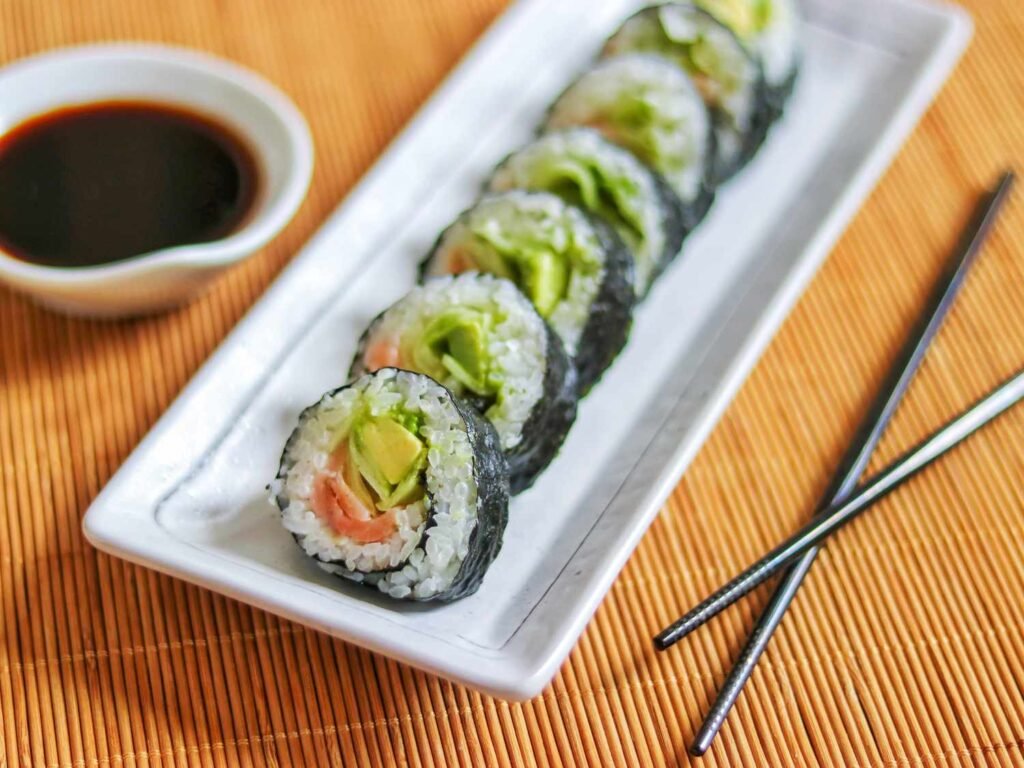
Salmon sushi is a Japanese favorite known for its delicate flavor, buttery texture, and perfectly seasoned rice. While it may look like something best left to restaurant chefs, you can make delicious salmon sushi at home with the right ingredients, a little preparation, and a few simple techniques.
Whether you’re preparing sushi for a weekend meal or trying your hand at Japanese cooking for the first time, this guide will walk you through choosing the salmon, preparing the rice, assembling the sushi, and serving it beautifully.
What Is Salmon Sushi?
Salmon sushi combines seasoned Japanese rice with salmon, sometimes accompanied by nori seaweed, cucumber, avocado, or other ingredients. It can take several forms, including nigiri, where salmon is placed over a small mound of rice, and maki, where rice and fillings are rolled in seaweed.
For this recipe, we’ll focus on salmon maki rolls, a beginner-friendly option that is easy to customize and serve.
Preparation Time and Servings
- Prep time: 30 minutes
- Cooking time: 20 minutes
- Total time: Approximately 50 minutes
- Servings: 2
- Difficulty: Moderate
Ingredients for Salmon Sushi
For the Sushi Rice
- 1 cup Japanese short-grain sushi rice
- 1¼ cups water, or the amount recommended on the rice package
- 2 tablespoons rice vinegar
- 1 tablespoon sugar
- ½ teaspoon salt
For the Sushi Rolls
- 150–200 g salmon suitable for raw consumption, or fully cooked salmon
- 3–4 sheets nori seaweed
- ½ cucumber, cut into thin strips
- ½ avocado, thinly sliced (optional)
For Serving
- Soy sauce
- Pickled ginger
- Wasabi, if desired
How to Make Salmon Sushi
Step 1: Prepare the Sushi Rice
Place the sushi rice in a bowl and rinse it several times with cold water until the water becomes mostly clear. This removes excess surface starch and helps the cooked rice achieve the right texture.
Cook the rice with water in a rice cooker or saucepan according to the package instructions. Once cooked, let it rest, covered, for about 10 minutes.
Meanwhile, combine the rice vinegar, sugar, and salt, stirring until dissolved. Transfer the warm rice to a wide bowl and gently fold in the vinegar mixture using a rice paddle or spatula. Avoid crushing the grains.
Allow the rice to cool to room temperature before assembling the sushi.
Step 2: Prepare the Salmon and Vegetables
Cut the salmon into long, thin strips suitable for rolling. Keep the strips relatively uniform so they fit neatly inside the sushi rolls.
If using cucumber, remove excess seeds if necessary and cut it into thin matchsticks. Slice the avocado just before assembling to prevent it from browning.
Important food-safety note: For raw sushi, use salmon specifically sourced and handled for raw consumption, with appropriate parasite-control measures. Ordinary fresh salmon is not automatically safe to eat raw, and freezing at home may not reliably eliminate parasites. Keep the fish refrigerated and follow local food-safety guidance. For a safer alternative, use fully cooked salmon that has been cooled promptly.
Step 3: Set Up Your Rolling Station
Place a bamboo sushi mat on a clean work surface. Cover it with food-safe plastic wrap if you want to make cleanup easier.
Lay one sheet of nori on the mat with its shiny side facing down. Keep a small bowl of water nearby to moisten your fingers and prevent the rice from sticking.
Step 4: Spread the Rice
Wet your fingers lightly and spread a thin, even layer of sushi rice over the nori, leaving a strip of about 2 cm uncovered along the far edge.
Avoid pressing too hard. The rice should hold together without becoming compacted or mushy.
Step 5: Add the Fillings
Arrange a strip of salmon horizontally across the rice, slightly below the center. Add cucumber and avocado if desired.
Keep the filling modest. Too much filling makes the roll difficult to close and can cause it to fall apart when sliced.
Step 6: Roll the Sushi
Lift the edge of the bamboo mat closest to you and fold the nori over the filling. Gently tuck the filling inward while rolling forward, applying even pressure to form a compact cylinder.
Continue rolling until the uncovered edge of nori seals the roll. Press gently along the length of the mat to help the roll hold its shape.
Repeat with the remaining ingredients.
Step 7: Slice and Serve
Use a sharp knife with a slightly damp blade to cut each roll into six to eight pieces. Clean and moisten the knife between cuts for neater slices.
Arrange the sushi on a serving plate and serve immediately with soy sauce, pickled ginger, and wasabi.
Tips for Perfect Homemade Salmon Sushi
Choose the right rice. Japanese short-grain rice provides the sticky texture needed to keep sushi rolls together. Long-grain rice is not a suitable substitute.
Let the rice cool naturally. Hot rice can warm the fish and soften the nori. Cool it to room temperature before assembling, and avoid leaving cooked rice at room temperature for extended periods.
Don’t overfill the rolls. A thin, even layer of rice and a modest amount of filling make rolling much easier.
Use a sharp knife. A sharp blade cuts through the nori and filling cleanly instead of crushing the roll.
Keep raw fish cold. Prepare the other ingredients first, remove the salmon from refrigeration only when needed, and refrigerate leftovers promptly. Do not leave sushi containing raw fish sitting out for extended periods.
Variations to Try
Spicy Salmon Sushi
Mix finely chopped cooked salmon with a little mayonnaise and chili sauce for a creamy, spicy filling. If using raw salmon, only use fish appropriate for raw consumption and handle it safely.
Salmon and Avocado Sushi
Combine salmon with ripe avocado for a creamy texture that balances the fish’s richness.
Cooked Salmon Sushi
Use flaked, fully cooked salmon with cucumber and a small amount of mayonnaise. This is an excellent option for people who prefer not to eat raw fish.
Salmon Nigiri
Shape small portions of seasoned sushi rice into oval mounds and place thin slices of appropriately prepared salmon over them. Press gently to help the fish adhere to the rice.
What to Serve with Salmon Sushi
Salmon sushi pairs well with miso soup, edamame, seaweed salad, or a simple cucumber salad. Green tea is also a refreshing accompaniment.
For a complete homemade Japanese meal, serve a few different sushi varieties alongside small side dishes instead of relying on one type of roll.
Frequently Asked Questions
Can I make salmon sushi without a bamboo mat?
Yes. A bamboo mat makes rolling easier, but you can use a clean kitchen towel covered with plastic wrap. Roll slowly and apply gentle, even pressure.
Can I use regular rice instead of sushi rice?
Japanese short-grain sushi rice is strongly recommended because its texture helps the rolls hold together. Other rice varieties generally produce a less authentic texture and may not roll as well.
Can I make salmon sushi ahead of time?
Sushi is best assembled shortly before serving. If you need to prepare components in advance, cook the rice and prepare the vegetables separately, then assemble close to mealtime. Raw fish requires especially careful refrigeration and handling.
Is salmon sushi healthy?
Salmon provides protein and omega-3 fatty acids, while rice supplies carbohydrates. The overall nutritional value depends on portion size and accompaniments, including sauces and mayonnaise.
How do I store leftover salmon sushi?
Refrigerate leftovers promptly in a covered container and follow food-safety guidance for raw seafood. Refrigeration does not make improperly handled raw fish safe, and the texture of sushi rice deteriorates over time. When in doubt, discard leftovers rather than risk foodborne illness.
Final Thoughts
Homemade salmon sushi is a rewarding way to explore Japanese cooking. Once you understand how to season the rice, prepare the fillings, and roll the nori, you can experiment with different combinations and develop a style of sushi that suits your taste.
Start with a simple salmon and cucumber roll, focus on getting the rice texture right, and build your skills from there. With practice, making sushi at home can become an enjoyable addition to your regular cooking routine.
Make Sushi Preparation Easier with the Right Kitchen Gear
Great sushi depends on more than fresh ingredients. The right kitchen tools can make preparing rice, slicing salmon, and rolling sushi much easier. A sharp chef’s knife, a reliable rice cooker, a sturdy cutting board, and a bamboo sushi mat are useful additions to a home cook’s kitchen.
Not sure which tools are worth investing in? Explore our Cooking Gear Guides for practical advice on choosing kitchen equipment, comparing useful tools, and finding options that suit your cooking style and budget.
Whether you’re preparing sushi, experimenting with new recipes, or upgrading your everyday kitchen setup, the right equipment can help make cooking simpler and more enjoyable.