
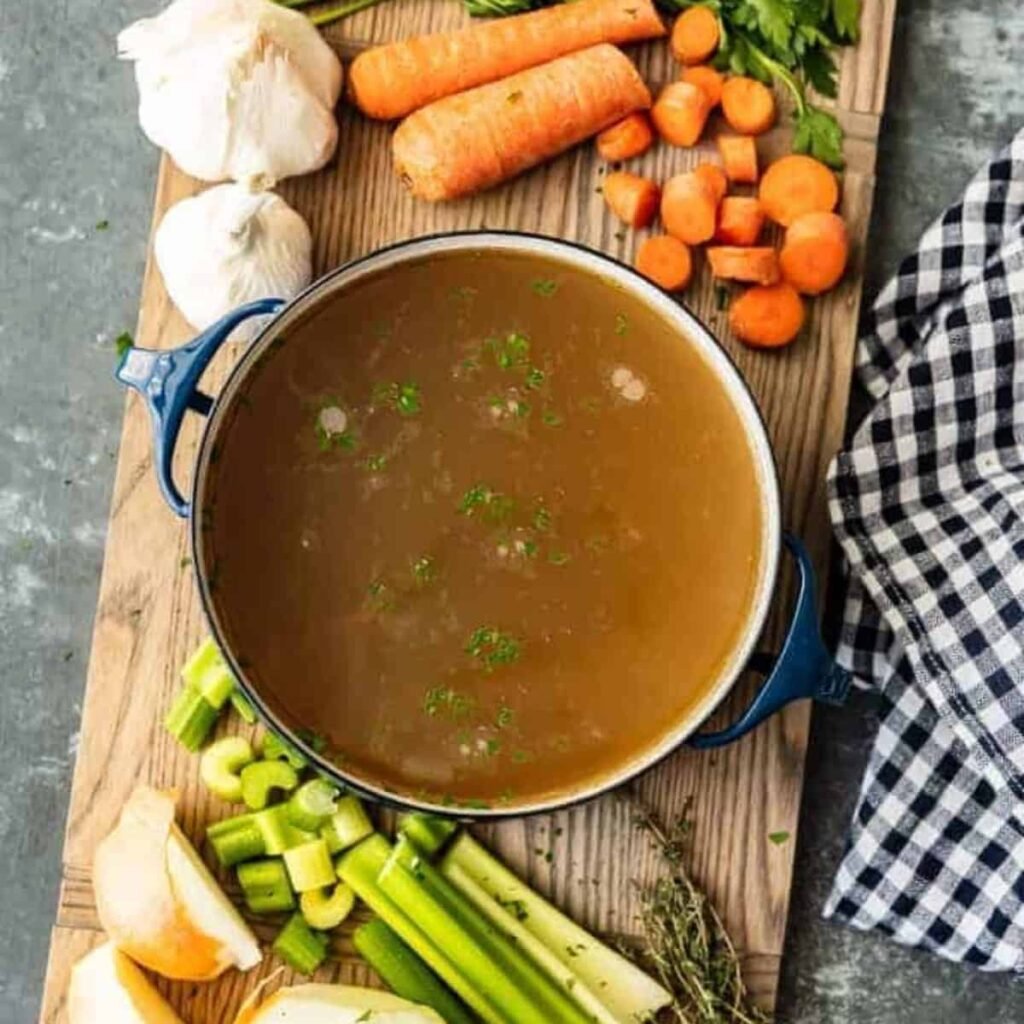
Homemade broth is one of the most useful foundations in cooking. Made by gently simmering vegetables, herbs, and other aromatics in water, broth adds depth and flavor to soups, curries, rice dishes, sauces, and countless everyday meals. It is easy to prepare, economical, and a great way to make the most of ingredients you already have in your kitchen.
Unlike many store-bought varieties, homemade broth lets you control the salt, seasoning, and ingredients. Whether you need a light vegetable broth for soup or a richer chicken broth for a comforting meal, this simple recipe gives you a versatile base to keep on hand.
What Is Broth?
Broth is a savory liquid prepared by simmering ingredients such as vegetables, herbs, meat, or poultry in water. It is generally cooked for a shorter time than stock and is often seasoned so that it can be enjoyed on its own or used in other recipes.
Vegetable broth is a convenient option for vegetarian and vegan cooking, while chicken broth provides a richer, meat-based alternative. Both can be used in a wide variety of dishes.
Preparation Time and Yield
-
Preparation time: 10 minutes
-
Cooking time: 45–60 minutes
-
Total time: Approximately 1 hour
-
Yield: About 4–5 cups
Ingredients
This recipe makes a simple vegetable broth. You can add chicken or other ingredients if you prefer a non-vegetarian version.
-
1 large onion, roughly chopped
-
2 medium carrots, chopped
-
2 celery stalks, chopped
-
3 garlic cloves, lightly crushed
-
1 bay leaf
-
1 teaspoon whole black peppercorns
-
4–5 fresh parsley sprigs or a small handful of coriander stems
-
1 small sprig of thyme, optional
-
6 cups water
-
Salt, to taste
-
1 teaspoon olive oil, optional
Instructions
Step 1: Prepare the Vegetables
Wash the vegetables thoroughly and cut them into large pieces. There is no need to chop them finely because their flavor will gradually infuse into the water during cooking.
Lightly crushing the garlic helps release its aroma. If you prefer a deeper flavor, sauté the onion, carrots, and celery in a little olive oil before adding the water.
Step 2: Combine the Ingredients
Place the vegetables, garlic, bay leaf, peppercorns, herbs, and water in a large pot. Bring the mixture to a gentle boil over medium-high heat.
Once it begins boiling, reduce the heat to low. The broth should simmer gently rather than bubble vigorously.
Step 3: Simmer the Broth
Allow the broth to simmer uncovered for 45–60 minutes. This gives the vegetables and herbs enough time to release their flavors into the water.
Avoid prolonged boiling, which can make the liquid cloudy and may produce an overly strong or bitter flavor. Taste the broth occasionally and adjust the cooking time according to your preferred intensity.
Step 4: Strain the Liquid
Turn off the heat and allow the broth to cool slightly. Pour it through a fine-mesh strainer into a heat-safe bowl or another pot.
Discard the cooked vegetables and herbs. If you want a cleaner, clearer broth, avoid pressing the vegetables too hard while straining.
Step 5: Season and Serve
Taste the broth and add salt as needed. You can use it immediately as a soup base or incorporate it into your favorite recipes.
If you plan to use the broth in dishes that already contain salty ingredients, consider leaving it lightly seasoned and adjusting the salt later.
Tips for Making Better Broth
Use fresh, aromatic ingredients. Onions, carrots, celery, garlic, and herbs provide a balanced foundation. You can also add mushroom stems for a deeper, savory flavor.
Avoid too much of any one vegetable. Large amounts of cabbage, broccoli, or other strong-flavored vegetables can overpower the broth or introduce bitterness.
Keep the simmer gentle. A slow simmer extracts flavor without unnecessarily agitating the liquid.
Season carefully. A lightly seasoned broth is more versatile because you can adjust it to suit individual dishes.
Make a larger batch. Preparing extra broth saves time when you need a quick base for soups, noodles, sauces, or rice.
Variations to Try
Chicken Broth
Add approximately 500–750 g of chicken pieces or a chicken carcass to the pot with the vegetables and water. Simmer gently for around 1½–2 hours, or until the chicken is cooked and the broth has developed a good flavor. Strain thoroughly and remove bones.
Mushroom Broth
Add a handful of fresh mushrooms or dried shiitake mushrooms to the vegetable broth ingredients. Mushrooms contribute a deep, savory flavor that works particularly well in noodle soups, risotto, and Asian-inspired dishes.
Ginger and Garlic Broth
Add a few slices of fresh ginger and extra garlic for a warming, aromatic broth. This variation works well in noodle bowls, light soups, and dishes inspired by East and Southeast Asian cooking.
Herb-Infused Broth
Experiment with parsley, thyme, bay leaves, coriander stems, or a small amount of rosemary. Choose herbs according to the dishes you intend to prepare.
How to Store Homemade Broth
Proper storage helps preserve the flavor and quality of homemade broth.
-
Refrigerator: Store in a clean, airtight container and use within 3–4 days.
-
Freezer: Freeze in suitable containers or freezer-safe portions for approximately 2–3 months for best quality.
-
Small portions: Freeze broth in measured quantities so you can conveniently add it to recipes without thawing the entire batch.
Cool the broth promptly in shallow containers or an ice bath, then refrigerate it within two hours of cooking. Do not leave it sitting at room temperature for extended periods. Reheat only the amount you need.
How to Use Broth in Everyday Cooking
Homemade broth can improve the flavor of many familiar dishes. Use it to prepare vegetable soup, chicken soup, noodle soup, risotto, pulao, gravies, sauces, and slow-cooked meals.
You can also replace some or all of the water used to cook rice, lentils, or grains with broth for a more flavorful result. When making pan sauces, a small amount of broth can help loosen browned bits from the bottom of the pan and create a richer sauce.
Frequently Asked Questions
Is broth the same as stock?
Not exactly. Broth is often made with meat, vegetables, and seasonings, while stock traditionally emphasizes bones and connective tissue for a fuller body. In everyday cooking, however, the terms are frequently used interchangeably.
Can I make broth without celery?
Yes. Celery adds a familiar aromatic flavor, but you can omit it and use additional onion, carrot, garlic, or herbs instead.
Why does my broth taste bland?
You may need more aromatic vegetables, a longer gentle simmer, or a little salt. Taste before making adjustments, especially if you intend to use the broth in a seasoned dish.
Can I drink homemade broth on its own?
Yes. A well-seasoned broth can be served as a warm, light drink or simple starter. Add fresh herbs, black pepper, or a squeeze of lemon to suit your taste.
Can I reuse the vegetables after straining?
The vegetables will have released much of their flavor into the broth, so they may taste rather bland. They can sometimes be blended into a soup or composted, depending on their texture and condition.
Final Thoughts
Homemade broth is a simple kitchen staple that can make everyday cooking more flavorful. With a handful of vegetables, a few herbs, and a little patience, you can prepare a versatile ingredient that works in everything from comforting soups to elaborate meals.
Once you become familiar with the basic method, experiment with different vegetables, herbs, and seasonings to create a broth that suits your cooking style. Making it in batches and freezing it in convenient portions can also make meal preparation easier throughout the week.
Make Cooking Easier with the Right Kitchen Gear
A good broth starts with simple ingredients, but the right kitchen tools can make preparation, simmering, straining, and storage much easier. A dependable stockpot, a fine-mesh strainer, a sharp chef’s knife, and sturdy storage containers are useful additions to any home kitchen.
Not sure which tools are worth investing in? Visit our Cooking Gear Guide for practical information on essential kitchen equipment, buying considerations, and tools that can help you get more out of your cooking. Whether you’re preparing homemade broth or exploring new recipes, choosing the right equipment can make every step simpler and more enjoyable.