
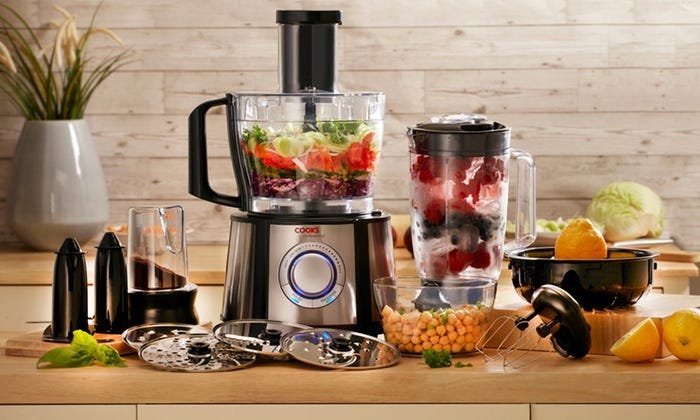
A good food processor can transform the way you cook at home. From chopping vegetables and shredding cheese to preparing dough, grinding nuts, and making sauces, this versatile kitchen appliance takes care of repetitive preparation tasks in minutes.
But not every food processor is designed for the same kind of cooking. Some excel at everyday chopping, while others offer the power and capacity needed for bread dough, large batches, and more demanding recipes.
In this guide, we’ll explore the different types of food processors, the features worth paying for, and how to choose the right model for your kitchen.
What Is a Food Processor?
A food processor is an electric kitchen appliance that uses interchangeable blades and discs to prepare ingredients quickly. Depending on the model, it can chop, slice, shred, mince, puree, knead dough, and mix certain ingredients.
Unlike a blender, which is primarily designed to blend liquids and softer ingredients, a food processor is built for solid foods and controlled food preparation. It can handle tasks such as chopping onions, shredding carrots, making breadcrumbs, and preparing pastry dough.
For home cooks who prepare meals regularly, it can save considerable time and effort.
The Best Types of Food Processors for Home Cooks
The best food processor depends on your cooking habits, household size, and available kitchen space.
1. Compact Food Processors for Everyday Tasks
Compact food processors are ideal for small households, occasional cooking, and kitchens with limited counter space.
They work well for chopping onions, garlic, herbs, nuts, and small quantities of vegetables. Many are also useful for preparing dips, dressings, and simple sauces.
Best for: Individuals, couples, small kitchens, and quick preparation tasks.
What to consider: Smaller bowls limit batch sizes, and compact models may struggle with heavy dough or large quantities of dense ingredients.
2. Full-Size Food Processors for Everyday Cooking
Full-size food processors offer a practical balance of capacity, versatility, and convenience. They are suitable for families and home cooks who prepare meals frequently.
Depending on the included accessories, they can slice vegetables, grate cheese, puree soups, make hummus, chop nuts, and prepare a variety of sauces.
Best for: Families, regular home cooking, meal preparation, and versatile kitchen use.
What to consider: Check the usable bowl capacity, the size of the feed chute, and whether the appliance includes the blades and discs you actually need.
3. High-Power Food Processors for Heavy-Duty Tasks
High-power models are designed for demanding preparation work, including larger batches, dense mixtures, and some types of dough.
They can be particularly useful for people who bake frequently, prepare homemade nut butters, or cook in larger quantities.
Best for: Enthusiastic home cooks, frequent bakers, and batch cooking.
What to consider: Higher wattage alone does not guarantee better performance. Blade design, motor durability, bowl capacity, and the manufacturer’s guidance on dough or dense mixtures matter just as much.
4. Food Processor and Blender Combos
Combination appliances bring several food preparation functions into one machine. Depending on the package, they may include a food processor bowl, blender jar, chopping attachment, and additional accessories.
These models can save counter space if you want one appliance for multiple tasks.
Best for: Small kitchens, multipurpose cooking, and households that regularly prepare smoothies, sauces, and chopped ingredients.
What to consider: Check whether the processor attachment performs as well as a dedicated food processor. Some combinations prioritize blending rather than food preparation.
5. Mini Choppers for Quick Preparation
Mini choppers are smaller appliances designed primarily for chopping and mincing. They are convenient for garlic, onions, herbs, nuts, and small quantities of ingredients.
Although they are sometimes grouped with food processors, they generally offer fewer functions and less capacity.
Best for: Simple everyday preparation and cooks who don’t need slicing discs, shredding attachments, or dough functions.
Food Processor Comparison: Which Type Should You Choose?
| Type | Main advantage | Best suited to |
|---|---|---|
| Compact processor | Easy storage | Small households |
| Full-size processor | Versatility | Everyday family cooking |
| High-power processor | Demanding tasks | Frequent cooking and baking |
| Processor-blender combo | Multiple functions | Space-conscious kitchens |
| Mini chopper | Quick, simple chopping | Small preparation jobs |
Important Features to Look for Before Buying
1. Bowl Capacity
Capacity determines how much food you can prepare in one batch. A small bowl may be sufficient for chopping herbs or preparing a quick dip, but larger batches of vegetables, dough, or shredded ingredients require more room.
As a general guide:
Under 1.5 litres: Small jobs and limited quantities.
Around 1.5–2.5 litres: Everyday preparation for smaller households.
Around 2.5–3.5 litres: A versatile range for many family kitchens.
Above 3.5 litres: Larger batches and more demanding preparation.
These are approximate categories rather than universal standards. Manufacturers may advertise total bowl volume, while the usable working capacity is smaller. Always check the specifications and maximum fill recommendations.
2. Motor Power
Motor power influences how effectively a processor handles different ingredients, but it should not be the only specification you compare.
For everyday chopping, slicing, and pureeing, a well-designed mid-range machine may be sufficient. Frequent dough preparation and heavy-duty tasks may justify a more powerful model designed specifically for those jobs.
Look for a motor with good durability, appropriate overload protection, and clear guidance about its intended uses.
3. Blades and Attachments
Accessories determine much of a food processor’s versatility.
The most useful attachments include:
S-shaped chopping blade: For chopping vegetables, nuts, herbs, and other ingredients.
Slicing disc: For uniform slices of vegetables and fruit.
Shredding disc: For grating cheese, carrots, cabbage, and similar ingredients.
Dough blade: For certain dough preparation tasks, where supplied.
Emulsifying attachment: For selected models that support whisking or emulsifying.
A model with several useful attachments can offer better value than one with numerous accessories you will rarely use.
4. Feed Chute Size
The feed chute is the opening through which ingredients enter the processor.
A wider chute lets you insert larger pieces of vegetables, which can reduce preparation time. A narrow chute may require more chopping before processing.
If you frequently slice cucumbers, potatoes, or other vegetables, this feature deserves particular attention.
5. Ease of Cleaning
Food processors have several components that need cleaning, including the bowl, lid, blades, and discs.
Look for dishwasher-safe parts if that convenience matters to you. Also consider how easily food gets trapped around seals, blade assemblies, and attachment connections.
The blades are extremely sharp, so handle and wash them carefully even when the appliance is switched off.
6. Safety Features
A food processor should have a secure lid-locking mechanism and a stable base. Many models include safety interlocks that prevent operation unless the bowl and lid are correctly assembled.
Other useful features include non-slip feet, overload protection, and convenient pulse controls.
Never reach into the bowl while the appliance is connected to power, and always allow moving parts to stop before removing the lid.
7. Warranty and Replacement Parts
A food processor is an appliance you may use for years. Before buying, check the warranty, service availability, and the cost of replacement bowls, lids, blades, and discs.
For buyers in India, local service support and the availability of compatible accessories can be especially important. A machine with excellent specifications is less attractive if essential replacement parts are difficult to obtain.
Which Food Processor Is Best for Different Cooking Needs?
For Indian Home Cooking
A food processor can help with chopping vegetables, shredding ingredients, preparing breadcrumbs, and making selected chutneys, dips, and pastes.
However, not every food processor is suitable for grinding hard spices or processing very wet mixtures. If those tasks are important, verify the manufacturer’s instructions and consider whether a dedicated mixer-grinder is a better fit.
For Baking
Home bakers should prioritize a sturdy motor, a suitable dough attachment, and clear manufacturer guidance on dough capacity.
A food processor can be useful for cutting butter into flour, preparing pastry, and mixing certain doughs. However, it cannot replace a stand mixer for every baking task, particularly those requiring extended kneading or whipping.
For Meal Preparation
If you regularly prepare vegetables for several meals, look for a full-size bowl, a wide feed chute, and reliable slicing and shredding discs.
These features can reduce the time spent preparing ingredients for salads, stir-fries, soups, and other dishes.
For Sauces, Dips, and Spreads
A food processor can make hummus, pesto, dips, dressings, and many thick sauces.
Choose a model with good chopping and pureeing performance. If you primarily prepare smoothies, thin soups, or large quantities of liquid, a blender may be more appropriate.
Food Processor vs Blender vs Mixer-Grinder
These appliances sometimes overlap, but each has different strengths.
| Appliance | Best uses |
|---|---|
| Food processor | Chopping, slicing, shredding, dough preparation, thick dips |
| Blender | Smoothies, liquid mixtures, pureed soups, drinks |
| Mixer-grinder | Grinding spices, making pastes, grinding ingredients according to the model’s capabilities |
| Mini chopper | Small quantities of chopped or minced ingredients |
If you cook a wide variety of dishes, a food processor can be a valuable addition. If your cooking mostly involves grinding spices and preparing traditional pastes, a mixer-grinder may be the more practical first purchase.
Common Food Processor Buying Mistakes
Buying the biggest model without considering storage. A large processor takes up counter and cupboard space. Choose a size that matches your usual batch quantities.
Choosing by wattage alone. Motor power is only one factor. Bowl design, attachments, build quality, and real-world suitability all matter.
Paying for attachments you won’t use. Extra accessories are valuable only when they support your cooking habits.
Ignoring cleaning requirements. Complicated assemblies can make an otherwise useful appliance inconvenient to use regularly.
Expecting it to replace every kitchen appliance. Food processors are versatile, but blenders, mixer-grinders, and stand mixers may perform certain tasks better.
Overlooking after-sales service. Check warranty terms and replacement-part availability before committing to a model.
How Much Should You Spend on a Food Processor?
The right budget depends on how often you cook and the tasks you expect the machine to perform.
Entry-level and compact models can be suitable for occasional chopping and small batches. Mid-range models often provide a useful balance of capacity and attachments for regular home cooking. Premium models may justify their higher cost through stronger construction, larger capacity, additional functions, or better long-term support.
Rather than choosing the most expensive machine, compare the features that matter most to you. Current prices and included accessories vary by brand, retailer, and market, so review the exact product configuration before purchasing.
Final Verdict: Choosing the Best Food Processor for Your Kitchen
For most home cooks, a full-size food processor with a practical bowl capacity, a chopping blade, slicing and shredding discs, easy-to-clean components, and dependable service support is a sensible starting point.
Choose a compact model if you prepare small quantities and value easy storage. Consider a high-power model if you regularly make dough or process larger batches. A combination appliance may be worthwhile if you also need a blender and want to save space.
The best food processor is not necessarily the one with the most functions. It is the one that makes your everyday cooking easier and that you will actually enjoy using.
Put Your Food Processor to Work: Explore Our Recipes
A food processor is most useful when you have delicious recipes to try. From preparing ingredients faster to creating smooth sauces, homemade dips, and flavourful dishes, the right appliance can make cooking more convenient.
Explore our Recipes page for inspiration, discover new dishes to prepare at home, and find practical ideas for making the most of your kitchen equipment.
Whether you’re planning a quick weekday meal or trying something new over the weekend, your next favourite recipe could be just a little preparation away.