
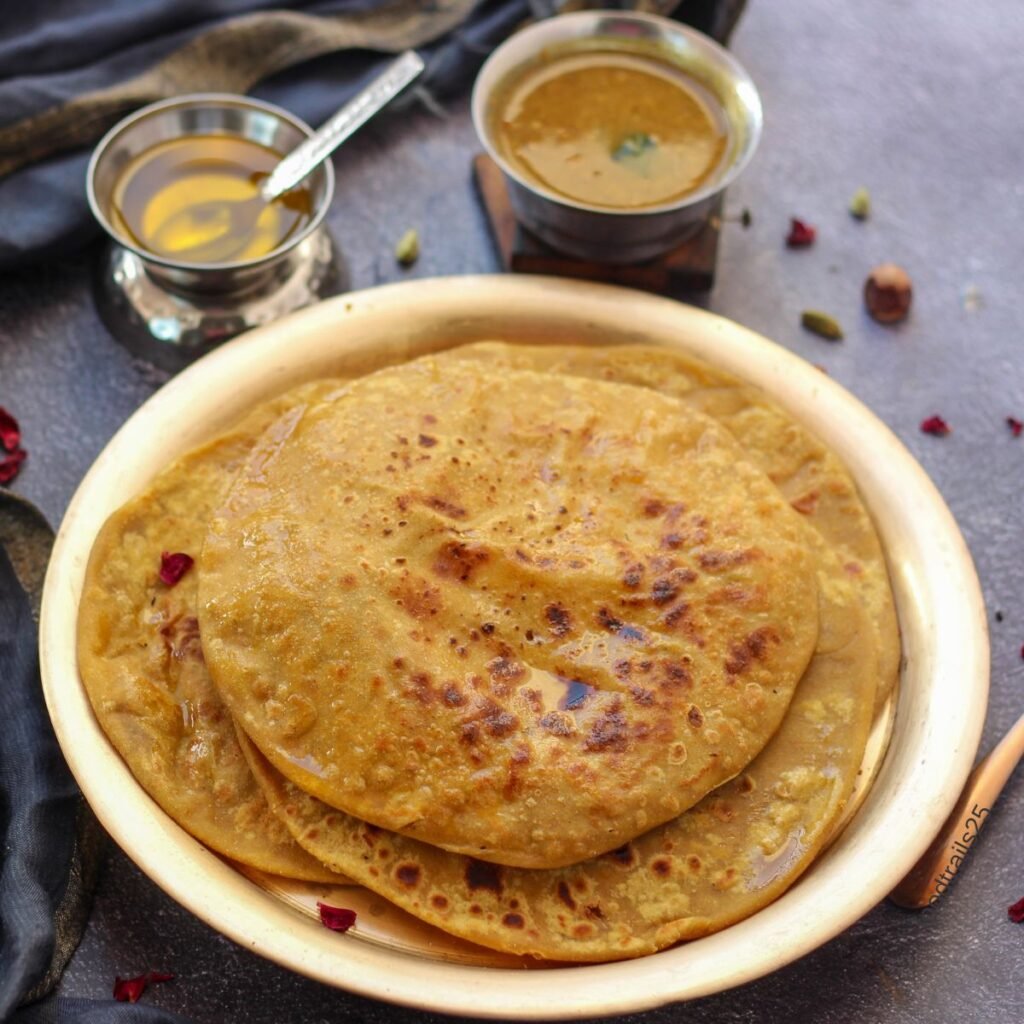
Puran Poli is a beloved Indian sweet flatbread made with a soft wheat-flour dough and a rich filling of cooked chana dal, jaggery, and aromatic spices. Popular in Maharashtra and enjoyed in different forms across several Indian regions, this traditional delicacy is especially associated with festivals such as Holi, Gudi Padwa, and Ganesh Chaturthi.
With its golden exterior, sweet lentil filling, and delicate cardamom aroma, Puran Poli is a comforting homemade treat. Although rolling the stuffed dough takes a little practice, this step-by-step recipe will help you make soft, flavourful Puran Poli in your own kitchen.
What Is Puran Poli?
Puran Poli consists of two main components: puran, the sweet lentil filling, and poli, the flatbread that surrounds it. The filling is typically made with chana dal and jaggery, flavoured with cardamom and sometimes nutmeg. The dough is usually prepared with whole wheat flour, a little oil, and water.
Depending on the region and family tradition, the recipe may vary slightly. Some versions use toor dal, while others include additional spices or serve the finished flatbread with ghee, milk, or a savoury curry.
Preparation Time and Servings
Preparation time: 25 minutes
Cooking time: 35–45 minutes
Resting time: 20–30 minutes
Servings: 8 medium Puran Polis
Difficulty: Moderate
Ingredients for Puran Poli
For the filling (Puran)
1 cup chana dal (split Bengal gram)
¾ to 1 cup grated or powdered jaggery, adjusted to taste
¼ teaspoon cardamom powder
A pinch of nutmeg powder (optional)
1 tablespoon ghee
For the dough (Poli)
1½ cups whole wheat flour
2 tablespoons all-purpose flour (optional, for a softer texture)
2 tablespoons oil or melted ghee
A pinch of salt
Water as needed
For cooking
Ghee, as needed
How to Make Puran Poli
Step 1: Cook the chana dal
Rinse the chana dal thoroughly under running water. Soak it for 30 minutes if you have time; this can help it cook more evenly.
Transfer the dal to a pressure cooker and add enough water to cover it generously. Pressure-cook until the dal is soft but still holds its shape. The exact cooking time depends on your cooker and the age of the dal.
Drain the cooked dal thoroughly. Excess moisture can make the filling difficult to roll inside the dough.
Step 2: Prepare the sweet filling
Mash the cooked dal or grind it into a smooth paste. Heat a heavy-bottomed pan over medium-low heat and add the dal, jaggery, and ghee.
Stir continuously as the jaggery melts and the mixture thickens. Cook until the filling becomes a soft, cohesive mass that holds its shape when stirred. It should not be watery or sticky.
Add the cardamom powder and optional nutmeg. Mix well and allow the filling to cool completely.
Tip: If the filling is too moist, continue cooking it over low heat. A thick, smooth filling is easier to enclose in the dough without tearing.
Step 3: Prepare the dough
Combine the whole wheat flour, optional all-purpose flour, salt, and oil in a mixing bowl. Gradually add water and knead until you have a smooth, soft, pliable dough.
The dough should be softer than typical chapati dough because a flexible dough is easier to stretch around the filling.
Cover and rest for 20–30 minutes. This allows the flour to hydrate and makes rolling easier.
Step 4: Divide the filling and dough
Divide the cooled filling into eight equal portions and shape them into balls.
Divide the dough into eight portions as well. Lightly grease your hands and work surface if needed to prevent sticking.
Try to keep the filling portions slightly smaller than or approximately equal to the dough portions, depending on how thin you want the outer layer.
Step 5: Stuff the dough
Take one dough ball and flatten it into a small disc. Place a portion of the filling in the centre.
Bring the edges of the dough together over the filling and pinch them closed securely. Remove any excess dough from the top if necessary.
Gently flatten the stuffed ball with your hands before rolling.
Step 6: Roll the Puran Poli
Dust the work surface with a little flour. Roll the stuffed dough gently into a medium-sized circle, approximately 6–8 inches across.
Apply even, gentle pressure and turn the dough as you roll. Avoid pressing too hard, as this may cause the filling to escape.
If the dough sticks, use a small amount of flour. Too much dry flour, however, can make the finished flatbread less tender.
Step 7: Cook until golden
Heat a flat griddle or tawa over medium heat. Place the rolled Puran Poli on the hot surface.
Cook until small bubbles appear and the underside develops light golden spots. Flip and cook the other side, applying a little ghee around the edges and over the surface.
Flip once more if needed, cooking until both sides are evenly golden and the flatbread is cooked through.
Repeat with the remaining portions.
Step 8: Serve warm
Serve Puran Poli warm with a generous drizzle of ghee. It pairs beautifully with warm milk and can also be enjoyed alongside a traditional festive meal.
Tips for Soft, Delicious Puran Poli
Drain the dal well: Excess water is one of the most common reasons the filling becomes difficult to handle.
Cook the filling thoroughly: It should be thick enough to hold together without leaking.
Rest the dough: A well-rested dough stretches more easily and is less likely to tear.
Use gentle pressure: Roll from the centre outward without forcing the filling through the dough.
Maintain medium heat: A griddle that is too hot can brown the outside before the inside cooks properly.
Add ghee while cooking: This enhances the aroma, flavour, and tenderness of the finished flatbread.
Common Mistakes to Avoid
Using undercooked dal: The filling may become grainy. Cook the dal until tender before mashing it.
Adding jaggery before draining excess water: A watery filling takes longer to thicken and can become difficult to stuff.
Making the dough too stiff: Stiff dough is more likely to crack around the filling. Knead it until soft and pliable.
Overfilling the dough: Too much filling can cause the outer layer to split. Start with a moderate amount and increase it as your technique improves.
Cooking over high heat: Excessive heat can burn the surface before the flatbread cooks evenly.
Variations You Can Try
Toor dal Puran Poli: Replace chana dal with toor dal for a variation found in some regional traditions.
Jaggery and coconut: Add a little freshly grated coconut to the filling for a different flavour and texture.
Extra aromatic filling: Add a small pinch of nutmeg or dry ginger powder alongside the cardamom.
Ghee-rich Puran Poli: Brush the finished flatbread with ghee just before serving for a richer festive treat.
How to Store Puran Poli
Allow the cooked Puran Polis to cool before storing them in an airtight container.
At room temperature: For a short period in cool conditions, provided food-safety conditions are suitable.
In the refrigerator: Store in an airtight container for approximately 2–3 days.
In the freezer: Freeze individually separated portions for longer storage, ideally for up to 1–2 months for good quality.
Reheat on a warm tawa with a little ghee, or use a microwave for a quick option. Refrigerate promptly in warm climates rather than leaving the flatbreads out for extended periods.
Frequently Asked Questions
Can I make Puran Poli without a pressure cooker?
Yes. Cook the chana dal in a saucepan with sufficient water until tender. This takes longer, so check the water level periodically and drain the dal thoroughly once cooked.
Why does my Puran Poli tear while rolling?
The dough may be too stiff, the filling may be too moist, or you may be applying too much pressure. Use soft dough, cool and thicken the filling properly, and roll gently.
Can I prepare the filling in advance?
Yes. Prepare the filling a day ahead and refrigerate it in an airtight container. Bring it to a manageable consistency before stuffing the dough.
Is Puran Poli traditionally served with ghee?
Yes. Ghee is a classic accompaniment that enhances the sweetness and aroma of the flatbread. Some regional traditions also serve it with milk or as part of a larger festive meal.
Can I use store-bought jaggery powder?
Yes. Jaggery powder is convenient and usually melts quickly. Choose good-quality jaggery and adjust the quantity according to its sweetness.
Conclusion
Puran Poli is more than a sweet flatbread; it is a cherished part of Indian festive cooking and home traditions. The combination of soft dough, sweet chana dal filling, jaggery, and cardamom creates a delicious treat that is worth the effort.
With a properly cooked filling, soft dough, and a little patience while rolling, you can make beautiful homemade Puran Poli for festivals, family gatherings, or whenever you crave a traditional Indian sweet.
Make Traditional Cooking Easier with the Right Kitchen Gear
A good recipe becomes easier to prepare when you have dependable tools in your kitchen. From a pressure cooker that cooks lentils evenly to a sturdy mixing bowl, a reliable rolling pin, and a well-heated tawa, the right equipment can make a noticeable difference in your cooking experience.
Looking to upgrade your kitchen essentials? Explore our Cooking Gear Guides for practical advice on choosing pressure cookers, cookware, kitchen tools, and other equipment for everyday cooking. Discover the tools that suit your kitchen, compare your options, and make your next homemade recipe a little easier.