
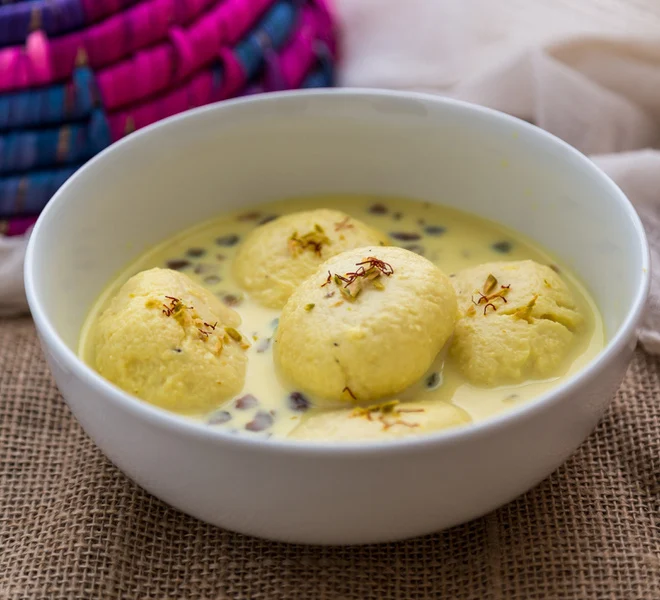
Rasmalai is one of India’s most beloved desserts, known for its soft, delicate cheese dumplings soaked in sweet, fragrant milk. Flavoured with cardamom, saffron, and nuts, this Bengali-inspired sweet is a popular choice for festivals, celebrations, and special meals.
Making rasmalai at home takes a little patience, but the result is worth it. With fresh chenna, properly prepared sugar syrup, and rich rabri, you can create a dessert that is soft, creamy, and full of flavour.
What Is Rasmalai?
Rasmalai consists of flattened, spongy dumplings made from fresh Indian cottage cheese, known as chenna. These dumplings are cooked in sugar syrup and then soaked in sweetened milk infused with cardamom and saffron.
The combination of delicate texture and creamy milk makes rasmalai a refreshing alternative to heavier Indian sweets.
Preparation and Cooking Time
-
Preparation time: 30 minutes
-
Cooking time: 40–50 minutes
-
Chilling time: 2–3 hours
-
Servings: 4
Ingredients
For the chenna dumplings
-
1 litre full-fat milk
-
2–3 tablespoons lemon juice, diluted with water
-
Cold water, as needed
For the sugar syrup
-
1 cup sugar
-
4 cups water
For the flavoured milk (rabri)
-
1 litre full-fat milk
-
4–5 tablespoons sugar, or to taste
-
¼ teaspoon cardamom powder
-
A few strands of saffron
-
2 tablespoons chopped pistachios
-
2 tablespoons chopped almonds
How to Make Rasmalai
Step 1: Prepare the chenna
Pour one litre of full-fat milk into a heavy-bottomed pot and bring it to a boil over medium heat, stirring occasionally to prevent scorching.
Turn off the heat and allow the milk to cool for about a minute. Gradually add diluted lemon juice while stirring gently until the milk separates into curds and greenish whey.
Line a strainer with a clean muslin cloth and pour the mixture through it. Rinse the curds under cold water to remove the lemon flavour.
Gather the cloth and drain the excess water for 30–45 minutes. The chenna should be moist but not watery.
Step 2: Knead and shape the dumplings
Transfer the chenna to a clean plate or a wide bowl. Knead it gently with your palm for about 8–10 minutes, until it becomes smooth and forms a soft dough without visible lumps.
Divide the dough into 8–10 equal portions. Roll each portion into a smooth ball, then gently flatten it into a small disc.
Avoid overworking the chenna, as this can make the dumplings dense or rubbery.
Step 3: Cook the dumplings in sugar syrup
Combine one cup of sugar and four cups of water in a wide pot. Bring the mixture to a rolling boil, stirring until the sugar dissolves.
Carefully add the flattened chenna discs. Cover the pot and cook over medium-high heat for 12–15 minutes. The dumplings should expand as they cook.
Keep the syrup boiling gently and ensure there is enough space for the dumplings to expand.
Turn off the heat and allow them to rest briefly in the syrup.
Step 4: Prepare the flavoured milk
In a separate heavy-bottomed pot, bring one litre of full-fat milk to a gentle boil. Lower the heat and simmer for 15–20 minutes, stirring frequently and scraping the sides of the pot.
Add sugar, cardamom powder, and saffron. Stir until the sugar dissolves and the milk develops a lightly creamy consistency.
Add the chopped almonds and pistachios. Turn off the heat and let the milk cool slightly.
Step 5: Combine the dumplings and milk
Remove the cooked dumplings from the sugar syrup. Gently press each one between two spoons or between your palms to remove excess syrup without crushing it.
Place the dumplings in the warm flavoured milk. Spoon the milk over them so that each piece is coated.
Allow the rasmalai to cool to room temperature, then refrigerate for at least 2–3 hours. This resting time allows the dumplings to absorb the flavours of the milk.
Step 6: Garnish and serve
Transfer the chilled rasmalai to serving bowls. Add a little extra chopped pistachio, almond slivers, or saffron on top.
Serve cold for the best texture and flavour.
Tips for Soft and Spongy Rasmalai
Use full-fat milk: It produces richer chenna and creamier flavoured milk.
Drain the chenna properly: Excess moisture can prevent the dumplings from holding their shape, but overly dry chenna may produce hard rasmalai.
Knead until smooth: Proper kneading helps create a uniform texture and reduces the chance of cracks.
Use a large pot: The dumplings expand considerably while cooking, so give them enough room.
Keep the sugar syrup boiling: A steady boil helps the dumplings expand and cook evenly.
Avoid pressing too hard: Remove excess syrup gently to preserve the delicate texture.
Chill before serving: Rasmalai tastes best after the dumplings have had time to absorb the flavoured milk.
Common Mistakes to Avoid
-
Rubbery dumplings: Usually caused by over-kneading or excessively dry chenna.
-
Hard dumplings: The chenna may not have been kneaded enough, or the dumplings may not have cooked properly.
-
Cracked dumplings: The chenna may be too dry or insufficiently smooth.
-
Watery flavoured milk: Simmer the milk longer to concentrate its flavour before adding the dumplings.
-
Excessively sour taste: Rinse the chenna thoroughly after separating the milk.
Variations You Can Try
Rose rasmalai: Add a small amount of rose water to the flavoured milk after switching off the heat.
Extra-creamy rasmalai: Add a little fresh cream to the milk toward the end of cooking.
Festive rasmalai: Garnish with saffron, pistachios, almonds, and a few dried rose petals.
Reduced-sugar rasmalai: Reduce the sugar in the flavoured milk to suit your taste. Remember that the dumplings are still cooked in sugar syrup.
Frequently Asked Questions
Can I make rasmalai a day ahead?
Yes. Rasmalai can be prepared a day in advance and refrigerated in an airtight container. The extra resting time helps the dumplings absorb the milk’s flavour.
How long does homemade rasmalai last?
Store it in the refrigerator in a clean, airtight container and consume it within 2–3 days. Do not leave it at room temperature for extended periods.
Why did my rasmalai become hard?
Hard rasmalai can result from chenna that is too dry, insufficient kneading, or dumplings that have not cooked properly. Make sure the chenna is moist and smooth before shaping.
Can I use store-bought paneer?
Fresh homemade chenna generally produces better results because it is softer and easier to knead. Store-bought paneer may be too firm or dry unless it is particularly fresh and suitable for this preparation.
Conclusion
Homemade rasmalai is a dessert that rewards patience with a wonderfully soft texture and rich, aromatic flavour. Fresh chenna, gently cooked sugar syrup, and saffron-infused milk are the keys to getting it right.
Whether you’re preparing it for a festival, a family gathering, or simply a sweet craving, this recipe brings the charm of a traditional Indian dessert to your kitchen.
Make Your Kitchen Work Better
Great recipes become easier when you have the right tools. From a heavy-bottomed pot for simmering milk to a fine-mesh strainer, mixing bowls, and reliable measuring cups, the right kitchen equipment can make preparing traditional desserts like rasmalai simpler and more consistent.
Explore our Cooking Gear Guides to discover useful kitchen tools, compare cookware, and find equipment that suits your cooking style. With the right essentials at hand, you can spend less time struggling with preparation and more time enjoying what you make.