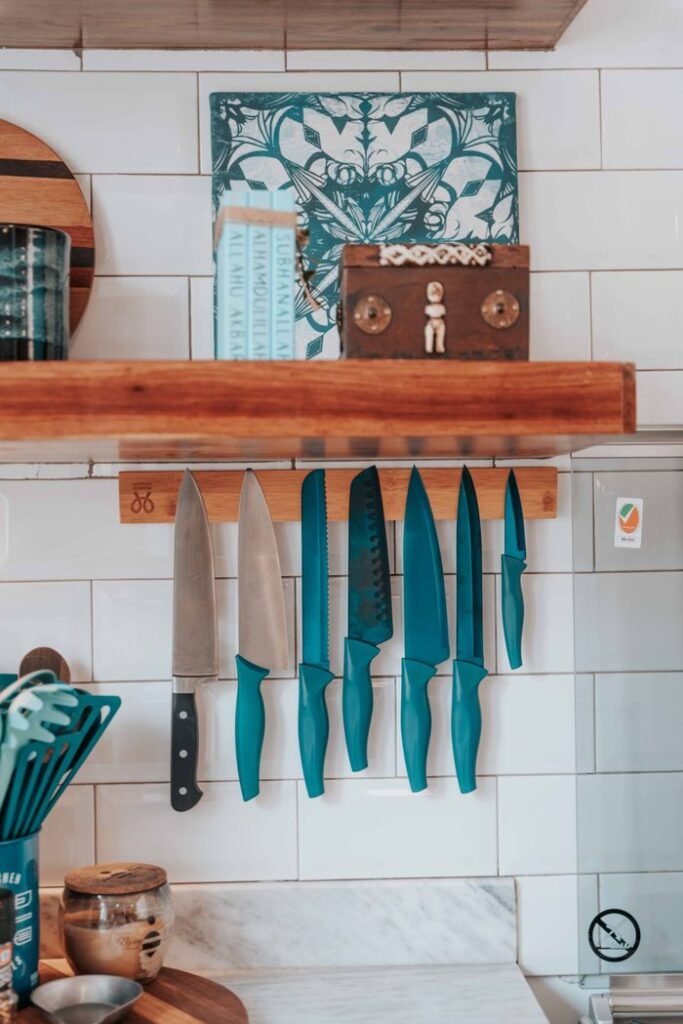
Best Kitchen Knives for Home Cooks: Top Picks for Every Kitchen
A good kitchen knife can completely change the way you cook. The right knife makes chopping vegetables faster, slicing meat cleaner, and everyday food preparation much easier. But with hundreds of options available—from affordable chef’s knives to premium Japanese blades—choosing the right one can be confusing.
For most home cooks, you don’t need a huge knife collection. A few well-chosen knives can handle almost everything you do in the kitchen.
In this guide, we’ll look at the best kitchen knives for home cooks, what makes each type useful, and what to consider before buying.
Quick Picks: Best Kitchen Knives for Home Cooks
| Best For | Knife Type | What to Look For |
|---|---|---|
| Best overall | 8-inch chef’s knife | Comfortable, versatile, balanced |
| Best budget | 8-inch chef’s knife | Good stainless steel, comfortable handle |
| Best for vegetables | Santoku knife | Lightweight, sharp, easy to control |
| Best for bread | Serrated bread knife | Long blade with durable serrations |
| Best for small tasks | Paring knife | Sharp 3–4 inch blade |
| Best for meat | Carving/slicing knife | Long, thin, precise blade |
| Best premium option | Japanese chef’s knife | High-quality steel and excellent edge retention |
1. Best Overall: The 8-Inch Chef’s Knife
If you’re buying only one kitchen knife, an 8-inch chef’s knife is usually the best place to start.
It’s the workhorse of the kitchen. You can use it to chop onions, slice vegetables, mince herbs, cut meat, crush garlic, and perform countless other preparation tasks.
An 8-inch blade is long enough to handle larger ingredients while still being manageable for most home cooks.
Why choose a chef’s knife?
-
Extremely versatile
-
Suitable for vegetables, meat and herbs
-
Large enough for most kitchen tasks
-
Easier to maintain than many specialty knives
-
Available at almost every price point
Best for: Home cooks who want one knife that can do almost everything.
2. Best for Vegetables: Santoku Knife
The Santoku is a Japanese-style knife that has become extremely popular in home kitchens.
Its shorter, wider blade and relatively lightweight design make it particularly comfortable for chopping vegetables. Many Santoku knives also feature small indentations along the blade that can help reduce food sticking.
Compared with a traditional chef’s knife, a Santoku often feels more nimble and controlled.
Why choose a Santoku?
-
Excellent for vegetables
-
Lightweight and maneuverable
-
Wide blade makes transferring chopped food easy
-
Comfortable for cooks who prefer a shorter knife
Best for: Vegetable-heavy cooking and cooks who prefer a lighter knife.
3. Best Budget Kitchen Knife
You don’t have to spend a fortune to get a good kitchen knife.
A well-made budget chef’s knife can perform remarkably well for everyday cooking. When shopping at the lower end of the price range, focus less on branding and more on the fundamentals: blade quality, handle comfort, balance and ease of sharpening.
A stainless-steel chef’s knife around 8 inches is a particularly practical choice.
What to look for in a budget knife
-
Stainless-steel blade
-
Comfortable, secure handle
-
Reasonable edge retention
-
Easy sharpening
-
Good balance
Avoid choosing a knife simply because it is extremely cheap. A slightly more expensive knife that stays sharp longer and feels comfortable can offer much better value over time.
4. Best Bread Knife: Serrated Knife
A serrated bread knife is one of those kitchen tools that seems unnecessary—until you actually use one.
The serrated edge is designed to cut through foods with tough exteriors and soft interiors without crushing them.
It’s ideal for:
-
Bread
-
Baguettes
-
Cakes
-
Tomatoes
-
Certain large fruits
Unlike a chef’s knife, you generally don’t want to use a bread knife for ordinary chopping.
Best for: Anyone who regularly buys or bakes bread.
5. Best Small Knife: Paring Knife
A paring knife is essentially the small, precise knife of the kitchen.
Its short blade gives you excellent control when working with small ingredients. It’s particularly useful for peeling, trimming and detailed cutting.
You can use one for:
-
Peeling fruits and vegetables
-
Removing seeds
-
Trimming vegetables
-
Cutting small fruits
-
Preparing garnishes
A good paring knife is inexpensive and takes up very little space, making it an easy addition to almost any kitchen.
6. Best Knife for Slicing Meat
If you regularly prepare roasts, cooked meats or large cuts of meat, a dedicated slicing or carving knife can be worthwhile.
These knives typically have long, relatively thin blades designed to produce clean, even slices.
They’re especially useful when presentation matters. Instead of repeatedly cutting through a roast with a short chef’s knife, the long blade allows you to make smoother cuts.
Best for: Roasts, cooked meats, large cuts and entertaining.
7. Best Premium Option: Japanese Chef’s Knife
For cooks who want to invest in a premium blade, Japanese kitchen knives are worth considering.
Japanese knives are available in several styles, including Gyuto, Santoku and Nakiri. Many are known for their excellent sharpness, thin profiles and high-quality steels.
However, premium Japanese knives aren’t automatically better for everyone.
Some use harder steels that can hold an edge for a long time but require more careful handling. They may also be less forgiving of misuse than a typical Western-style chef’s knife.
Best for: Enthusiastic home cooks who appreciate precision and are willing to maintain their knives properly.
What Kitchen Knives Do You Actually Need?
You don’t need ten different knives to cook well.
For most home cooks, a simple three-knife setup is enough:
1. Chef’s Knife
Your primary all-purpose knife.
2. Paring Knife
For small and precise tasks.
3. Serrated Bread Knife
For bread and other foods that benefit from a serrated edge.
A Santoku can replace the chef’s knife if you prefer its shape and handling.
Once you’ve covered these basics, specialty knives are mostly about convenience and personal preference.
How to Choose the Best Kitchen Knife
Before buying a knife, consider these factors.
Blade Material
Most kitchen knives use stainless steel or some type of carbon steel.
Stainless steel is popular because it is relatively resistant to corrosion and generally easy to maintain.
Carbon steel can develop an excellent edge and is favored by many knife enthusiasts, but it requires more care and can discolor or rust if neglected.
For most home cooks, stainless steel is the simpler choice.
Blade Length
For an everyday chef’s knife, 8 inches is a good starting point.
A 6-inch knife may feel easier to control, particularly for smaller hands, while a 10-inch knife provides more cutting surface but can feel intimidating or cumbersome.
The best length is ultimately the one you can comfortably control.
Handle Comfort
A knife can have excellent steel and still be a poor choice if the handle doesn’t feel comfortable.
Pay attention to:
-
Grip
-
Weight
-
Balance
-
Handle shape
-
Overall comfort
If possible, hold the knife before buying it.
Edge Retention
Some knives stay sharp longer than others.
High-quality steels can provide excellent edge retention, but edge retention isn’t everything. A knife that’s extremely hard and difficult to sharpen may be less convenient for an everyday home cook than a slightly softer blade that’s easy to maintain.
Weight and Balance
Some cooks prefer heavy knives because they provide momentum while chopping.
Others prefer lightweight knives because they are easier to maneuver.
Neither is objectively better. Choose the style that feels natural in your hand.
How Much Should You Spend on a Kitchen Knife?
More expensive doesn’t always mean better.
For a home cook, a good mid-range knife can provide an excellent balance between performance, durability and price.
Very inexpensive knives can work perfectly well, but quality and consistency can vary. At the premium end, you’re often paying for better materials, craftsmanship, edge performance and refinement rather than simply getting a knife that is dramatically more capable.
Think about how often you’ll use the knife before deciding how much to spend.
How to Keep Your Kitchen Knives Sharp
Even the best knife becomes frustrating when it’s dull.
A few simple habits can significantly extend its performance.
Use the right cutting surface
Wood and appropriate plastic cutting boards are generally kinder to knife edges than very hard surfaces such as glass or stone.
Don’t put good knives in the dishwasher
The heat, detergent and movement can damage handles and accelerate corrosion or edge damage.
Hand-wash your knives and dry them after use.
Sharpen regularly
A honing rod can help maintain an existing edge, while sharpening actually removes material to create a new edge.
Eventually, every knife needs sharpening.
Store knives safely
Avoid throwing loose knives into a drawer. A knife block, magnetic strip or blade guard can protect both the knife and your hands.
Best Kitchen Knife Setup for Different Home Cooks
For beginners
-
8-inch chef’s knife
-
Paring knife
-
Serrated bread knife
This gives you almost everything you need.
For vegetable lovers
-
Santoku
-
Paring knife
-
Serrated knife
The Santoku makes an excellent primary knife for chopping and slicing vegetables.
For meat lovers
-
Chef’s knife
-
Carving knife
-
Boning knife
This setup gives you greater control when preparing different cuts of meat.
For serious home cooks
-
Premium chef’s knife or Gyuto
-
Santoku or Nakiri
-
Paring knife
-
Serrated bread knife
-
Carving or slicing knife
This provides a versatile collection without turning your kitchen into a knife shop.
Frequently Asked Questions
Is an 8-inch chef’s knife enough for most home cooks?
Yes. An 8-inch chef’s knife can handle a huge range of everyday kitchen tasks and is the best single-knife starting point for many home cooks.
Is a Santoku better than a chef’s knife?
Not necessarily. They have different designs and feel different in use. A Santoku may be preferable if you want a lighter, shorter knife, while a chef’s knife offers excellent all-around versatility.
Are expensive kitchen knives worth it?
They can be, particularly for people who cook frequently and appreciate premium materials and craftsmanship. But a moderately priced knife can provide excellent performance for everyday cooking.
How often should kitchen knives be sharpened?
It depends on how frequently you use the knife, the steel, the cutting board and how you maintain it. Instead of following a fixed schedule, sharpen when you notice the knife becoming noticeably less effective.
How many kitchen knives does a home cook need?
For most people, three knives are enough: a chef’s knife, a paring knife and a serrated bread knife.
Final Verdict
The best kitchen knife for a home cook isn’t necessarily the most expensive one. It’s the knife that feels comfortable, stays sharp, is easy to maintain and suits the way you actually cook.
For most kitchens, start with a quality 8-inch chef’s knife, add a paring knife and serrated bread knife, and expand your collection only when a specific cooking task justifies another knife.
If you’re serious about cooking, investing in one excellent everyday knife is usually far more useful than buying a large set of mediocre blades.