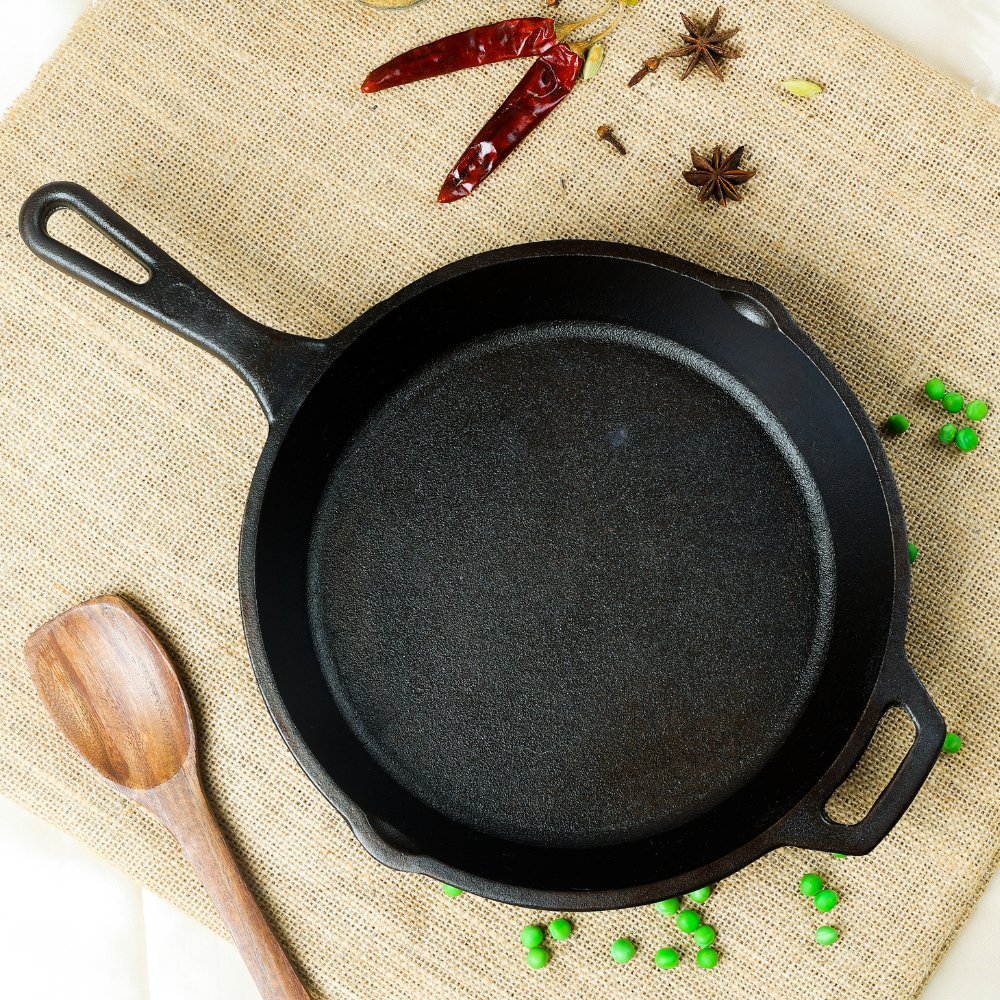
The Best Cast-Iron Skillets, According to How We Actually Cook
A cast-iron skillet should do more than sear a steak. It should become the pan you reach for without thinking. Here are the ones worth making room for.
There is a particular satisfaction to cooking with cast iron.
You heat the skillet until it’s properly hot, drop in a piece of chicken, and hear that immediate, aggressive sizzle. Minutes later, the skin is deeply browned and crisp. The pan goes into the oven. Dinner comes out. You wipe it clean, rub in the thinnest film of oil, and put it back on the stove.
Do that for a few years and the skillet starts to feel less like cookware and more like part of the kitchen.
But buying one isn’t quite as simple as picking the heaviest black pan you can find. Cast-iron skillets vary considerably in weight, surface texture, handle design, seasoning, price, and overall finish.
The good news? You don’t need to spend a fortune.
For most home cooks, a 10- to 10.5-inch pre-seasoned skillet is the sweet spot. It is large enough for dinner for two or three, small enough to handle comfortably, and versatile enough to take on everything from fried eggs to roast chicken.
Below are the skillets we’d put on our own stovetops, from inexpensive workhorses to beautifully finished heirloom pieces.
Our Favorite Cast-Iron Skillets
Best Overall: Lodge 10.25-Inch Cast-Iron Skillet
If you only buy one cast-iron skillet, make it this one.
The Lodge 10.25-inch is the cast-iron skillet against which nearly everything else gets measured. It isn’t fancy. It doesn’t try to be. It is thick, heavy, pre-seasoned, oven-safe, grill-friendly, and inexpensive enough that you can buy one without agonizing over the decision.
And then you can cook absolutely everything in it.
A steak develops a beautiful crust. Potatoes stay crisp. Cornbread gets those deeply browned edges that are difficult to reproduce in a lighter pan. It can move from stovetop to oven without complaint.
The cooking surface has the slightly pebbled texture associated with traditional cast iron rather than the polished finish found on some premium skillets. But don’t confuse texture with poor performance. With regular use and good seasoning, it can become remarkably slick.
Why we love it: It’s nearly impossible to beat for the money.
The catch: It’s heavy, and the traditional surface isn’t as smooth as premium competitors.
Best for: Almost everyone.
Verdict: The cast-iron skillet we’d recommend to most home cooks.
Best Budget Alternative: Victoria 10-Inch Cast-Iron Skillet
Victoria makes the kind of cookware that’s easy to underestimate.
Its 10-inch skillet offers much of what people love about traditional cast iron—excellent heat retention, durability and versatility—while incorporating a few thoughtful design touches, including a relatively generous handle and helper handle.
The slightly smaller size also makes it a particularly approachable choice if you’re new to cast iron.
It’s the skillet to consider when you want the performance without paying for heritage branding or premium finishing.
Why we love it: Excellent value and comfortable proportions.
The catch: The finish isn’t as refined as more expensive skillets.
Best for: First-time buyers and budget-conscious cooks.
Verdict: A very convincing alternative to the classic Lodge.
Best Premium Skillet: Stargazer 10.5-Inch
Once you get beyond the basic cast-iron skillet, the differences become less about whether the pan can sear a steak and more about how enjoyable it is to use.
That’s where Stargazer makes its case.
The cooking surface is smoother than traditional cast iron, while the handle has been designed with everyday maneuverability in mind. It still has the substantial heat retention you’d expect from cast iron, but the overall experience feels more considered.
And that’s really what you’re paying for.
A premium cast-iron skillet isn’t going to make your steak magically taste twice as good. What it can do is make the process of cooking with cast iron feel nicer.
Why we love it: A polished experience without abandoning the character of cast iron.
The catch: The price is considerably higher than a Lodge.
Best for: Cooks who already know they love cast iron.
Verdict: A worthwhile upgrade if your skillet lives on the stovetop.
Best Lightweight Cast Iron: Field Company No. 10
There is one complaint that almost everyone eventually makes about cast iron:
Why is this thing so damn heavy?
Field Company took that problem seriously.
Its skillets use a lighter, thinner design inspired by vintage cast iron, making them easier to lift, tilt and maneuver than many traditional pans. The cooking surface is also smoother, giving the skillet a distinctly different feel from conventional sand-cast cookware.
For someone who loves what cast iron does but hates wrestling with it, this is an unusually compelling alternative.
The compromise is price. Lightweight premium cast iron is still premium cast iron.
Why we love it: It makes cast iron significantly more pleasant to maneuver.
The catch: You’re paying substantially more for that refinement.
Best for: Frequent cast-iron users who dislike heavy cookware.
Verdict: One of the smartest premium approaches to modern cast iron.
Best Luxury Skillet: Smithey No. 10
Smithey makes cast iron that looks almost too beautiful to cook in.
The interiors are polished smooth, the proportions are elegant, and the whole thing has the visual appeal of cookware that could plausibly be handed down through a family.
But this isn’t merely decorative.
The smooth cooking surface, substantial construction and thoughtful handle design make it a serious cooking tool. It retains the heat that makes cast iron so good at browning while offering a more refined experience than conventional skillets.
There is, however, an important distinction to make.
You don’t need a Smithey to cook better food.
You’re buying craftsmanship, finish, design and the pleasure of owning something made to last.
For some cooks, that’s precisely the point.
Why we love it: Gorgeous craftsmanship with serious cooking performance.
The catch: The price makes it difficult to justify as a first skillet.
Best for: Enthusiasts and cooks looking for heirloom-quality cookware.
Verdict: A splurge, but a very satisfying one.
The 10-Inch Question: What Size Cast Iron Skillet Should You Buy?
Cast iron is heavy enough that size matters more than it does with other cookware.
A 12-inch skillet might sound like the obvious choice for versatility, but fill it with food and suddenly you’re lifting a small piece of gym equipment.
For most kitchens, 10 to 10.5 inches is the Goldilocks zone.
8 inches
Cute, compact and genuinely useful for:
-
Fried eggs
-
Individual portions
-
Small desserts
-
Toasting spices
-
Cooking for one
But it is better as a second skillet than your only one.
10–10.5 inches
The sweet spot.
Large enough for chicken thighs, steaks, vegetables, cornbread and one-pan dinners, while still being manageable.
If you’re buying your first cast-iron skillet, this is the size we’d choose.
12 inches
The family-size option.
Choose it if you’re regularly cooking for four or more people or want enough surface area for multiple steaks.
Just remember: bigger cast iron means considerably more weight.
What Makes a Cast-Iron Skillet Good?
The material itself is remarkably simple. The differences between skillets come down to the details.
Heat retention
This is cast iron’s superpower.
Cast iron takes longer to heat than thinner cookware, but once it’s hot, it holds onto that heat exceptionally well.
That’s exactly what you want when you’re trying to develop a deep, brown crust.
The trick is to preheat patiently rather than blasting the burner and immediately throwing food into the pan.
Weight
More isn’t necessarily better.
Heavy cast iron can feel wonderfully substantial, but there’s a point where the skillet becomes inconvenient.
Think about how you’ll actually use it.
If you’re comfortable lifting a 12-inch skillet with one hand, great. If not, a 10-inch or lighter premium skillet may be the better purchase.
Surface texture
Traditional cast iron often has a slightly textured cooking surface.
Premium skillets may be polished or machined smooth.
A smooth surface can make delicate foods feel easier to cook, but it isn’t a requirement for good cast iron.
A properly seasoned traditional skillet can perform beautifully.
Don’t spend $200 simply because someone told you rough cast iron is bad.
Handle design
This is one of the least glamorous and most important details.
A good handle should give you enough leverage to move the skillet without making you feel like you’re wrestling with it.
A helper handle is especially useful on larger skillets.
And remember: cast-iron handles get extremely hot.
Always assume the handle is hot once the skillet has been on the stove or in the oven.
Pre-Seasoned or Bare?
For most cooks, pre-seasoned is the obvious choice.
Seasoning is the layer of polymerized oil that protects the iron and helps create a naturally slick cooking surface.
A pre-seasoned skillet gives you a head start.
You can cook with it immediately, then build and maintain the seasoning over time.
Bare cast iron isn’t necessarily better. It simply gives you more control over the initial seasoning process.
Unless you’re a cast-iron enthusiast who actively enjoys seasoning cookware, buy pre-seasoned and start cooking.
What Can You Cook in Cast Iron?
The short answer is: a lot.
Cast iron excels whenever you want high heat, deep browning or an oven finish.
The classics
-
Steak
-
Burgers
-
Pork chops
-
Chicken thighs
-
Fried chicken
-
Crispy potatoes
-
Roasted vegetables
-
Cornbread
And some less obvious choices
-
Shakshuka
-
Frittatas
-
Skillet pizza
-
Dutch babies
-
Fruit cobblers
-
Skillet cookies
-
Grilled sandwiches
The ability to go directly from stovetop to oven is one of the reasons cast iron earns its permanent place in so many kitchens.
Can You Cook Tomatoes in Cast Iron?
Yes—with a little common sense.
Acidic ingredients can interact with exposed iron, particularly in a newer or poorly seasoned skillet. A short tomato-based dish isn’t likely to destroy a well-maintained pan, but simmering a highly acidic sauce for hours isn’t the ideal job for traditional cast iron.
For long, acidic cooking, reach for stainless steel or enameled cast iron instead.
How to Clean a Cast-Iron Skillet
The good news is that cast iron doesn’t require a complicated ritual.
After cooking:
-
Let the skillet cool enough to handle safely.
-
Wash it with warm water.
-
Scrub away stuck-on food.
-
Dry it thoroughly.
-
Apply a very thin layer of cooking oil if necessary.
-
Store it somewhere dry.
And yes, you can use a little dish soap.
The idea that soap will instantly destroy cast-iron seasoning belongs more to kitchen folklore than modern cookware care.
What you really want to avoid is leaving the skillet wet for extended periods.
Moisture is the enemy.
Do You Need to Season It Every Time?
No.
You don’t need to perform a ceremonial seasoning ritual after every meal.
A well-maintained skillet can go through many cooking sessions without requiring a dedicated seasoning treatment.
If the surface looks dry, apply an extremely thin layer of oil after cleaning and drying it.
And the best way to develop seasoning?
Cook.
The more you use your skillet, the more familiar its surface becomes.
Cast Iron vs. Stainless Steel vs. Nonstick
Every pan has a job.
| Cast Iron | Stainless Steel | Nonstick | |
|---|---|---|---|
| Searing | Excellent | Excellent | Fair |
| Heat retention | Excellent | Good | Moderate |
| Eggs | Good once seasoned | Tricky | Excellent |
| Oven cooking | Excellent | Excellent | Depends on coating |
| Durability | Exceptional | Exceptional | Limited |
| Maintenance | Moderate | Easy | Easy |
| Weight | Heavy | Moderate | Light |
Rather than replacing every other pan in your kitchen, think of cast iron as the high-heat specialist that can also do almost everything else.
How Much Should You Spend?
This is where cast iron gets interesting.
Under $50: The sweet spot for most people
Lodge and Victoria offer excellent performance at relatively modest prices.
If you’ve never owned cast iron before, there’s little reason to start at the premium end.
$50–$150: Premium territory
Here you’re paying for:
-
Smoother surfaces
-
Better handles
-
Lighter construction
-
More refined finishing
-
Smaller production runs
$150+: Heirloom territory
At this point, cooking performance is only part of the equation.
You’re also buying craftsmanship, aesthetics and the satisfaction of owning something made to stay in your kitchen for decades.
Our Cast-Iron Buying Advice
If we were building a cast-iron collection from scratch, we’d keep it simple.
First skillet: Get a 10- or 10.25-inch Lodge.
Cooking for a family: Move up to 12 inches.
Already love cast iron: Consider Stargazer or Field Company.
Want something beautiful enough to leave on the stovetop: Smithey.
You don’t need five cast-iron skillets.
You need one good skillet that you actually use.
The Bottom Line
The best cast-iron skillet isn’t the one with the highest price tag or the smoothest marketing copy.
It’s the one that makes you want to cook.
For most people, that means a 10–10.5-inch Lodge or Victoria. They’re inexpensive, durable and capable of extraordinary cooking once you learn how to heat and maintain them.
If you’re willing to spend more, premium makers such as Stargazer, Field Company and Smithey offer meaningful improvements in handling, finish and overall craftsmanship.
But the fundamental beauty of cast iron remains the same.
Heat it slowly. Cook something delicious. Let it cool. Clean it. Use it again.
Do that for long enough and the skillet stops being a purchase.
It becomes yours.
Quick Picks
Best overall: Lodge 10.25-Inch Cast-Iron Skillet
Best budget: Victoria 10-Inch Cast-Iron Skillet
Best premium: Stargazer 10.5-Inch
Best lightweight: Field Company No. 10
Best luxury: Smithey No. 10
Best size for most cooks: 10–10.5 inches
Best advice for beginners: Buy pre-seasoned and start cooking.